New Zealand’s two major political parties, National and Labour, are losing popular support. The latest 1News Verian poll had a combined total for both parties of only 61 percent, among the lowest since the introduction of our MMP electoral system.
Their polling weakness reflects a deeper failure: neither party has provided compelling economic answers to the country’s long-term challenges.
People are frustrated with NZ’s left for confusing more government spending with the delivery of quality public goods, for pretending that redistribution can provide abundance for all, and for equating centralisation with state capacity.
There is equal frustration with NZ’s right for confusing fiscal austerity with economic growth, deregulation with productivity, and small government with better government.
Neither approach has worked. Successive National and Labour governments have left us with a high cost of living, sluggish economic growth, shallow capital markets, fiscal pressures from population ageing, and low savings.
That is why National’s recent announcement on compulsory KiwiSaver matters. It is a courageous admission, from our largest centre-right party, that market forces and voluntary savings alone cannot solve our problems.
The political revival of our major parties requires them to think beyond their own conventional wisdom. A distinctly new reformist agenda is needed, building on the best of competitive markets and personal responsibility, while using strong institutions to support universal savings, productive investment and broader ownership.
Compulsory KiwiSaver is not merely a retirement policy. It comes with other implications. It points to a more fundamental question that neither party has answered: “what kind of capitalism should NZ build for the next generation?” The answer is influenced by our economic inheritance, which both parties still operate under.
During the eighties and nineties, Finance Ministers Roger Douglas and Ruth Richardson, under Labour and National governments, oversaw the dismantling of an exhausted protected economy. They achieved successes – averting a currency crisis, lowering inflation, restoring fiscal discipline and opening the economy.
But their reform style also caused serious damage. Welfare spending was cut during a recession. State-owned assets were sold, which caused greater market concentration. The cost of living rose. A third of the population with no savings were locked out of high-asset markets and left to their own devices.
The historical mistake was to turn a necessary period of liberalisation, designed for a specific crisis, into a permanent “catch-all” neoliberal prescription for every problem.
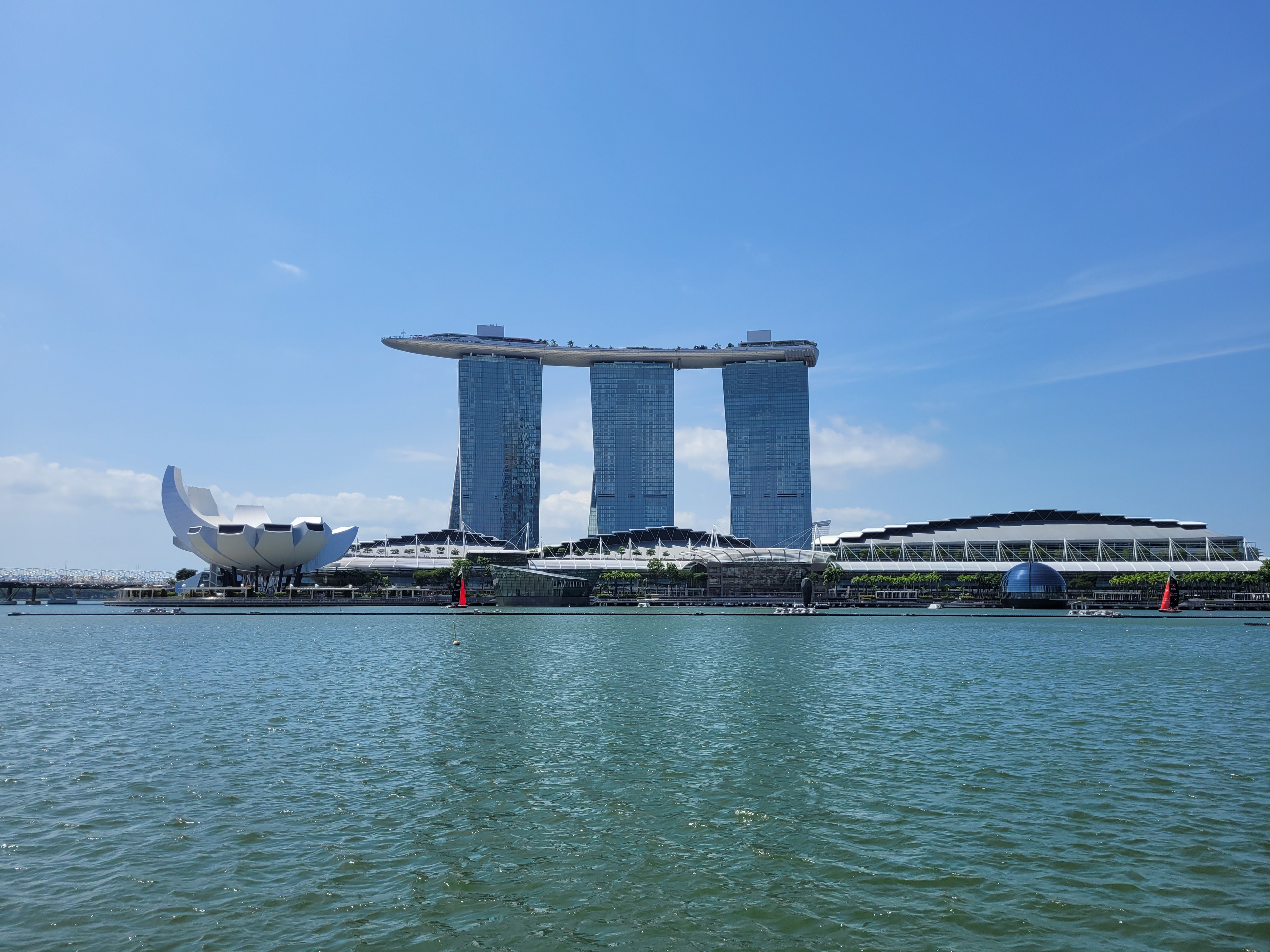
Even though our country performed reasonably well in the OECD afterwards, we failed to match Australia’s economic growth – let alone economies like Singapore and South Korea.
Unlike New Zealand, Australia never treated market liberalisation as the whole economic project. Instead, it only marked the start of a broad national development strategy.
By combining gradual market reform with compulsory superannuation in 1992, Australia successfully turned wages into a savings pool for investment. The result is now AU $4.5 trillion under management.
New Zealand liberalised. Australia capitalised.
That is the missing element of our reform story. We never built an equivalent national savings architecture to create a deep pool of domestic capital to support productive investment and broaden wealth to include those left behind. Without deeper domestic capital markets, it is harder for new firms to scale, challenge incumbents, and place pressure on concentrated sectors.
As presciently analysed by former Reserve Bank Governor Graeme Wheeler, New Zealand relied too heavily on housing, foreign capital, immigration, construction, tourism and primary exports as the engines of growth. That model is no longer enough.
Compulsory KiwiSaver will not solve every problem, but it marks a departure from the old economic reflexes that have dominated National and Labour thinking. It is neither old-fashioned socialist nostalgia nor libertarian fantasy, but the beginning of an asset-owning capitalism in which everyone shares.
For younger New Zealanders, this matters enormously. Generation Z and young Millennials are inheriting unaffordable housing and scant savings, whilst being asked to fund an ever-larger number of elderly with higher taxes. They are being asked to pay more of the future bill without being given the tools to own part of that future.
Universal KiwiSaver does not fit neatly under either old-fashioned ideology. It may not be the end of the debate, but it does symbolically mark a new future for Kiwi capitalism.
Leonard Hong is an economist based in Auckland who has a Master’s degree in International Political Economy from the Nanyang Technological University, Singapore (2024). He is a leadership network member of the Asia NZ Foundation, an executive member of the Korea-New Zealand Business Council and a former adviser to former Minister of Commerce Hon. Andrew Bayly