“A super idea: mandatory saving for retirement” – Hong & MacCulloch

Former Australian PM Paul Keating, right, pictured here in 2016 with his predecessor Bob Hawke, brought in mandatory retirement saving in Australia. 

New Zealand’s rapidly ageing population is putting increasing pressure on the Government’s budget, with threats of large cuts in welfare, or tax hikes, or both.

Mandatory savings, as have been successfully modelled by both Australia and Singapore, could help ease the burden without undermining our state pension, NZ Super.

Australia’s former Labor Prime Minister Paul Keating enacted mandatory savings in 1992, supplementing an existing mean-tested pay-as-you-go public pension. He says its advent slashed reliance on taxpayer-funded pensions.

With a contribution rate of 12 percent, and on the back of compound interest, Australia’s Super wealth is estimated to reach $8 trillion by 2035, becoming the second largest in the world (after the US).

Singapore also has mandatory savings, managed by the Central Provident Fund. The institution is lauded globally with around NZ$876 billion assets under management. Both superannuation and healthcare are provided through mandatory individual accounts.

Meanwhile, 19 years after New Zealand’s voluntary KiwiSaver was set up, a low default rate of employer and employee contributions equal to 3 percent of wages (from 2009 to 2025) has meant average balances nationally now sit at about $41,000.

Mandatory accounts were set up in Chile in 1981, although under dictatorship without democratic mandate. Similar models later spread through Latin America and Eastern Europe, but many countries reversed course after the 2008 global financial crisis, shifting back towards optional state systems or abandoning individual accounts altogether.

Why have so many governments refrained from ensuring individuals build greater savings to fund their own welfare needs? Particularly in retirement, and given that public welfare is in such jeopardy?

In New Zealand, there are three reasons why politicians have been unwilling to implement mandatory savings to bolster the state pension.

First, because many policymakers and thinkers across both left and right political ideology have opposed it. Second, because none of the political parties have produced a well-supported plan for how to make the change in a way that doesn’t hurt average workers financially. Third, because of myopia in political decision-making underestimating compound returns.

Although Prime Minister Helen Clark’s government promoted savings through introducing KiwiSaver in 2007, a mandatory scheme was a step too far for her party. This may be related to suspicions about ‘privatising welfare’.

Many politicians on the left in New Zealand still prefer to prioritise reliance on a public pension.

Some politicians and academics on the left worry that making KiwiSaver compulsory would eventually undermine NZ Super, by prompting governments to introduce means-testing arguing that retirees with significant savings no longer need the full pension.

Mandatory savings have also not sat comfortably with National Party ideology either. When KiwiSaver was first proposed, then-National Opposition leader Sir John Key called it a ‘glorified Christmas club’. His party voted against KiwiSaver.

Although the current coalition Government increased minimum KiwiSaver contributions by employees and employers from 3 percent to 3.5 percent in 2026, it also ended subsidies and amended the KiwiSaver Act to create the new first-home withdrawal option.

Proposals for mandatory savings reform usually require employees, employers or both to contribute more. But those extra payments don’t replace taxes. They sit on top of them. That means people could end up paying both: contributions into KiwiSaver and taxes that fund NZ Super, leaving workers with less.

So how might reform in this area win majority support?

Former Australian PM Keating says the political feasibility of his reform depended on including it in a package of tax and tariff cuts, and a shift to union enterprise bargaining through agreements with the Australian Council of Trade Unions.

In his 1995 Budget, he proposed 3 percent tax cuts would be paid into people’s superannuation accounts to raise contributions by 3 percent. That left government with a revenue shortfall, so to keep fiscal balance it came with cuts in areas receiving government support.

This could be done in New Zealand by targeting high-income groups receiving welfare, such as tertiary students from wealthy families on interest-free loans and fee subsidies, winter energy subsidies to the wealthy, screen production grants for big-budget films, and accelerated depreciation allowances to chosen industries.

This would be met with fierce political resistance. The ending of movie subsidies was met with threats to go elsewhere, even though grants totalling $300 million have already been made for Avatar films and Amazon’s Lord of the Rings franchise.

Whatever one’s views on the best structure for our pension system, relying on each young generation to support the elderly with taxes is, more than ever, threatened by the size of our ageing population. Neither the right nor left in New Zealand have provided an answer.

But mandatory savings have been shown to work in nations like Australia and Singapore. They provide an unorthodox but a more seamless pathway out of fiscal crisis, and in contrast to rapid increases to taxation, monetisation of public debt, or harsh fiscal austerity measures.

Leonard Hong is an Auckland-based economist and a student at the University of Auckland Business School

Professor Robert MacCulloch is the Matthew S Abel Chair in Macroeconomics at The Business School of the University of Auckland

Why Singapore matters to New Zealand right now

For many New Zealanders, Singapore may still feel like a stopover city or a gleaming business hub. But as global tensions expose just how vulnerable small economies can be, the relationship is taking on much greater significance. Drawing on his own experience studying in Singapore, Leonard Hong explores why this city-state has become one of New Zealand’s most important strategic partners, and what Prime Minister Christopher Luxon’s recent visit reveals about trade, trust and resilience in an increasingly uncertain world.

When I was a postgraduate student at Nanyang Technological University in 2023, I had an interesting realisation. My Singaporean friends, when they learned I was a Kiwi, would often recall their time in Matamata visiting Hobbiton or talk about following the All Blacks from Singapore. Some also reminisced about past trips to Queenstown and Milford Sound.

What stuck with me, however, was how many Singaporeans described Kiwis as “very friendly.”

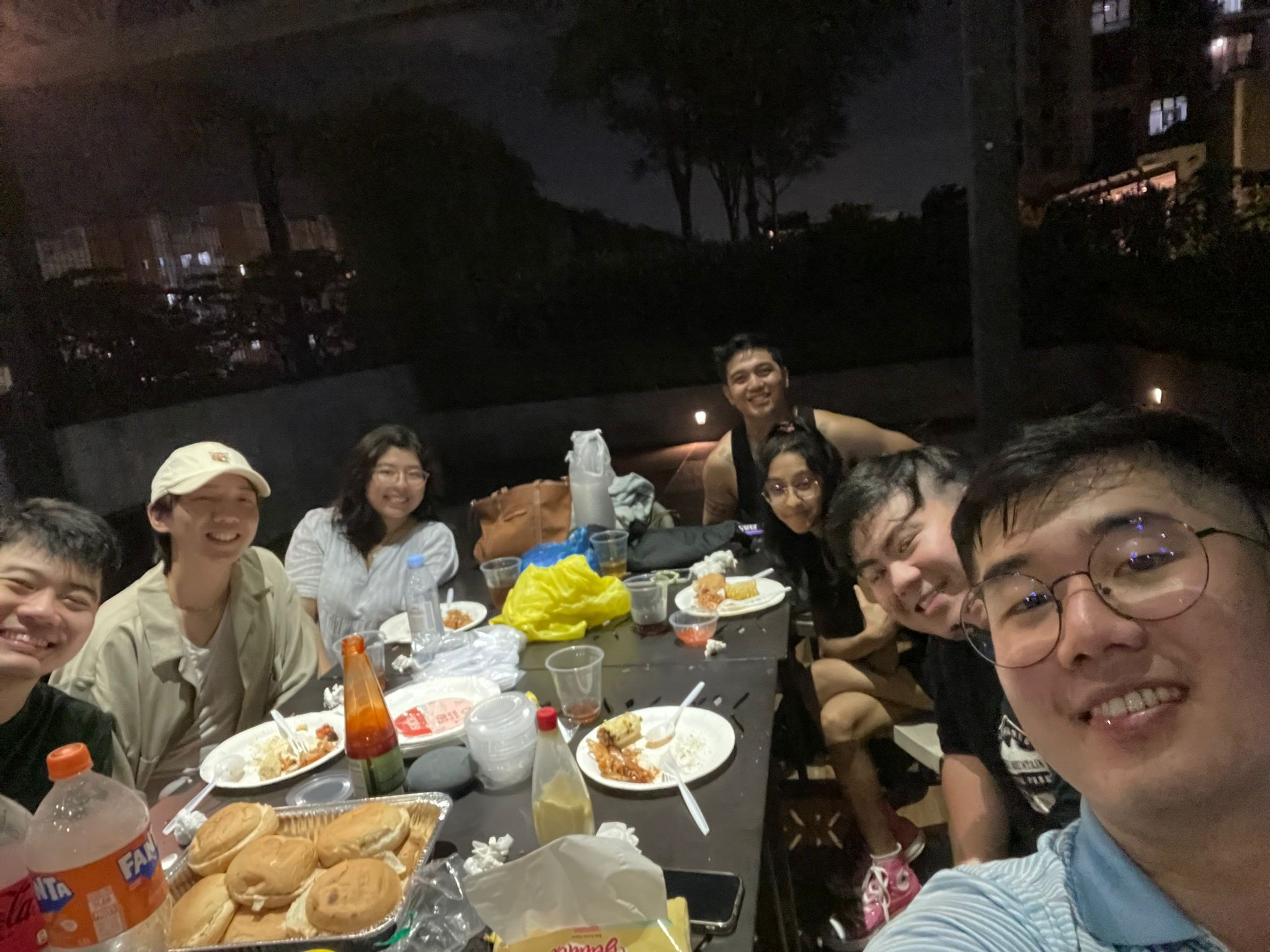
Leonard with his friends in Singapore. Image credits – Leonard Hong/AMC

In a more uncertain world, the relationship between our two countries is becoming increasingly important to our economic security and resilience. Singapore is one of New Zealand’s closest and most trusted partners outside our Trans-Tasman relationship with Australia.

Recent tensions in the Middle East and pressure on global energy routes have reminded New Zealand how exposed we are to disruptions far from our shores. In an increasingly fragile and unstable global economy, New Zealand needs strong international partners that share our values and can support one another in times of crisis. Both countries believe strongly in a credible multilateral system that upholds the rule of international law.

Singapore matters to New Zealand not only because it is wealthy, well governed, and strategically located, but because it is a partner we can rely on in a world where shocks are becoming more frequent. Fuel, food, shipping routes, supply chain resilience, defence cooperation, and diplomatic trust all underpin this bilateral relationship.

What’s Actually at Stake in This Visit

It is a special relationship, not only at the government-to-government level, but also through business, education, tourism, and people-to-people ties. We saw this directly in the warm rapport between Prime Ministers Christopher Luxon and Lawrence Wong at the Singapore-New Zealand Leadership Forum last week.

Closer ties at all levels, including through Track II diplomacy, will only benefit both countries in the years ahead.

In trade, the two countries complement each other well. New Zealand’s abundant natural resources allow us to provide daily essentials, including dairy, meat, and even water. Singapore, by contrast, has developed world-leading industries such as advanced manufacturing, logistics, and petrochemicals, built on human capital and innovation.

Crucially, New Zealand imports 33 per cent of its refined fuel from Singapore, and Singapore is our fourth-largest trading partner. Meanwhile, 28 per cent of Singapore’s dairy imports and 14 per cent of its food imports come from New Zealand.

We are a critical partner for a city-state that relies almost entirely on international trade for its survival. Both countries depend on one another for economic security and essential supplies, as recent concerns over the Strait of Hormuz have demonstrated.

The Agreement on Trade in Essential Supplies (AOTES), announced by the New Zealand and Singapore governments, may seem like a technical arrangement, but it matters. It gives legal weight to a simple idea: in a crisis, trusted partners should keep essential goods moving.

The agreement creates a binding framework to help keep supply chains open between the two countries. More importantly, it builds on the trust we have developed over decades and provides legal assurances that our two small, open economies can continue to thrive in an increasingly uncertain world.

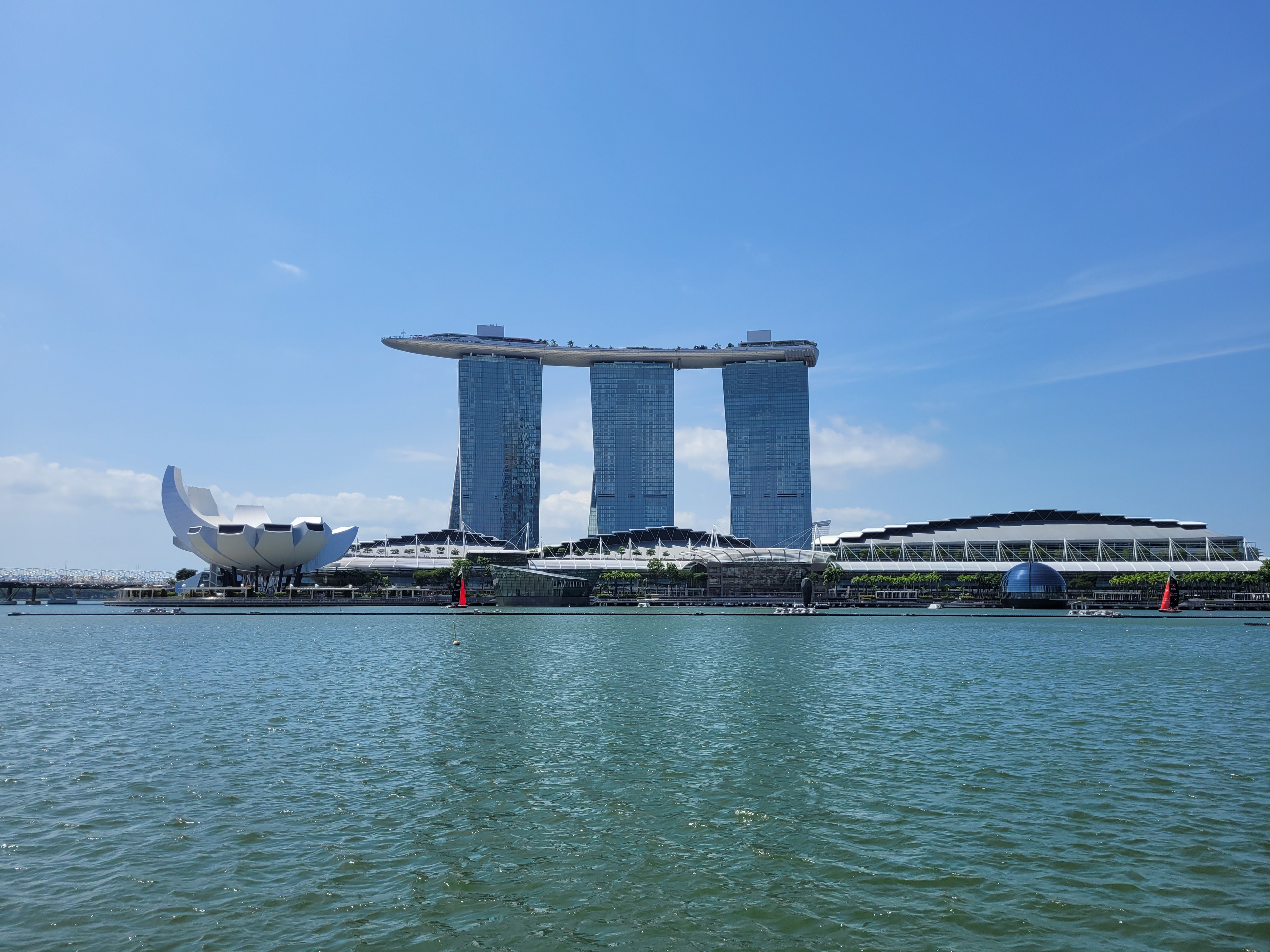
Many New Zealanders admire Singapore’s infrastructure, public administration, savings system, and long-term planning. Image credits – Leonard Hong/AMC

How Singapore Might Be Viewing New Zealand

From my observations, Singaporeans see New Zealand as a close and trusted partner with whom they have maintained diplomatic relations for more than 60 years.

As Singapore’s Prime Minister Lawrence Wong put it: “Singapore and New Zealand share many strategic perspectives. We have long seen the world in similar ways. We believe in openness and cooperation. Over the years, we have built a deep reservoir of trust. And we do not just speak about principles; we act on them.”

Both countries also have qualities from which the other can learn.

Many Singaporeans see New Zealand as a society that places greater emphasis on wellbeing, life satisfaction, and quality of life. Our natural beauty, lakes and mountains, and rich indigenous heritage through Te Ao Māori are often viewed as culturally dynamic and inclusive.

New Zealand’s open spaces, slower pace of life, and strong education system appeal to Singaporean families seeking a different lifestyle balance. Singapore, in turn, offers world-class institutions such as the National University of Singapore, a highly regarded civil service, and leading financial institutions like DBS Bank.

At the same time, many New Zealanders admire Singapore’s infrastructure, public administration, savings system, and long-term planning.

The relationship works partly because each country sees something in the other that it can learn from.

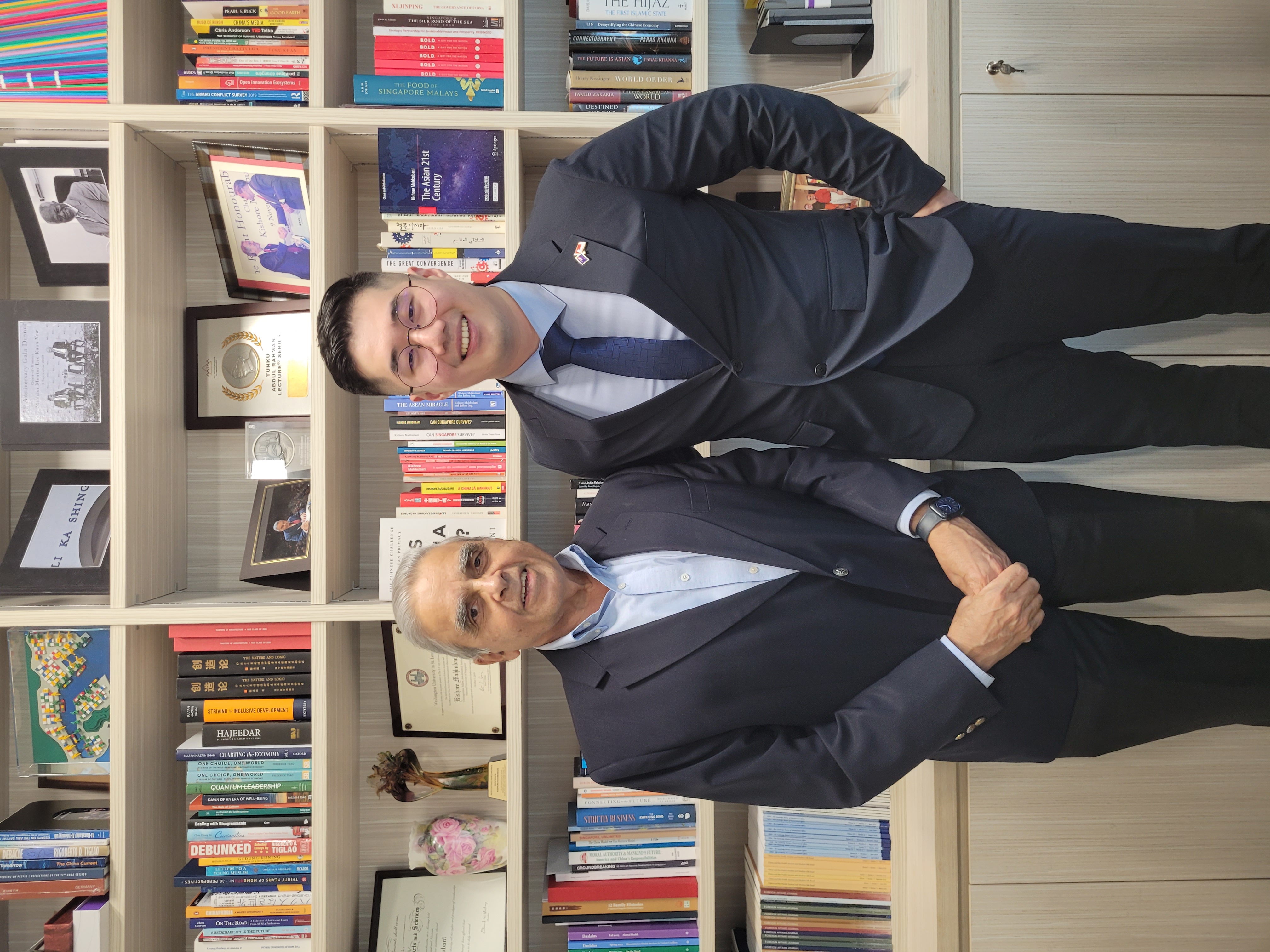
Leonard with Professor Kishore Mahbubani,  Distinguished Fellow, Asia Research Institute at National University of Singapore

What This Could Mean for the Relationship Going Forward

In recent years, Singapore’s economy and society have attracted growing attention in New Zealand. I have often advocated for compulsory KiwiSaver by pointing to Singapore’s highly successful Central Provident Fund savings system.

Following his visit, Prime Minister Christopher Luxon noted that New Zealand could learn from the Singapore Story, particularly in areas such as infrastructure and urban development.

Any lessons, of course, would need to be adapted to New Zealand’s own democratic, social, and institutional context.

The relationship between the two countries is likely to evolve on two fronts.

First, governments, both current and future, will continue identifying policy lessons that can help New Zealand remain economically competitive and strengthen ties with one of our most important partners.

Second, the partnership will deepen through trade agreements and closer alignment on foreign policy.

And Importantly, Why People Here Should Care

New Zealanders should care about Singapore because it is one of Asia’s most successful economies and one of our most important strategic partners.

Last year, the two countries celebrated 60 years of diplomatic relations, and the partnership is likely to grow stronger as both small, open economies navigate major geopolitical headwinds.

For many New Zealanders, Singapore may still feel like a stopover, a business hub, or a place admired for its efficiency. But it is much more than that.

It is one of our most important partners in Asia, a country that understands the vulnerabilities of small, open economies and a reminder that prosperity depends not only on markets, but also on trust, preparation, and resilient institutions.

Singapore and New Zealand are not just friendly countries. We are two small, open economies trying to remain secure and prosperous in a more uncertain world.

In an era of greater geopolitical risk and increasingly fragile supply chains, Singapore is no longer just a useful partner for New Zealand. It is a strategic one.

Leonard Hong is an experienced political economist with a focus on macroeconomics, international economics, urban development and public policy. He has a Master’s degree in International Political Economy from Nanyang Technological University in Singapore. He is a Leadership Network Member of the Asia NZ Foundation and NZ Prime Minister’s Scholar for Asia.

Praise – and Criticism – of Dr. Henry Kissinger

Dr Kissinger in 2014

On November 23, 2023, Dr. Henry Kissinger passed away at his home in Connecticut peacefully at the age of 100 years. Being a curious student of international affairs, I’ve always found him an unusual character – someone who perhaps has a terrible reputation and yet simultaneously admired by elites and academics for decades. When I heard the news pop up on Bloomberg, I felt sad in contrast to other peers around me. Many called him a “war criminal” for his actions as Secretary of State and National Security Advisor under President Nixon. But paraphrasing from his biographer Niall Ferguson, I think that claim may be quite harsh because various American policymakers have made either worse or equally destructive decisions such as President Truman’s nuclear bombing of Hiroshima and Nagasaki. Yet, I do think he deserves scrutiny and history needs to be objective.

Personally, despite what others might say, I put myself relatively more in the “admirers” camp. It is not because I agreed with everything he did – I have strong disagreements with some of his foreign policy approaches and found his brash arrogance across his books occasionally annoying – but rather to do with his academic contributions. Yes, his unilateral involvement in Chile created prolonged issues with the installment of Dictator Augusto Pinochet. His actions in Vietnam prolonged the war which perhaps caused more American deaths and unnecessary suffering of the Vietnamese people. Kissinger and Nixon’s call to carpet bombing Cambodia likely contributed to the rise of the genocidal Khmer Rouge. His decision to support the Bush Administration’s 2003 War in Iraq alongside the neoconservatives was also indefensible. However, he also made a lot of world-leading decisions. Following the initial engagements he had with Mao Zedong in the 1970s, his realist approach to international relations changed the world, paving the way for Deng Xiaoping’s pragmatic leadership. Without Kissinger’s foreign policies, the world would not have witnessed the rapid rise of globalization and exponential improvements in the world economy.

He is also someone who never stopped learning and provided important scholarship in his subsequent years even before his passing. I was fortunate enough to read two of his books, “World Order” and “On China“. I’ve also read his authorized biography, “Kissinger: 1923-1968: The Idealist” by Niall Ferguson as well, which taught me a lot about what it takes to become a master in the field of international relations and how he leveraged his networks with elites. A very charming and charismatic diplomat who be-friended Nelson Rockefeller as a Harvard Professor. I did buy a copy of his last work published in 2022, “Leadership: Six Studies in World Strategy” which I hope to read sometime after I finish my postgraduate programme in Singapore. Nevertheless, throughout his overall scholarship, he always emphasized the importance of pragmatism and effectiveness, rather than ideological crusades in the image of “liberalism”. The notion of the balance of power, the 1648 Treaty of Westphalia, and the crucial importance of “legitimacy” were all common themes throughout his books. He has historically toyed with Immanuel Kant’s “Perpetual Peace” hypothesis and was in many ways a person with strong convictions on a morally just society based on his previous experience as a German Jewish refugee to the United States. His decision-making was made broadly on the strong sentiment that there is no such thing as solutions, but only trade-offs – the worst of two evils. Whilst this might sound cruel, he always kept this sense of tragedy in his mind and viewed human nature broadly in a negative light. Machiavellianism was one of the key ideas that I think he utilised to maximize his own position. A complex ideological thinker who was a true Realist, but context-driven with strong moral convictions about what he truly believed

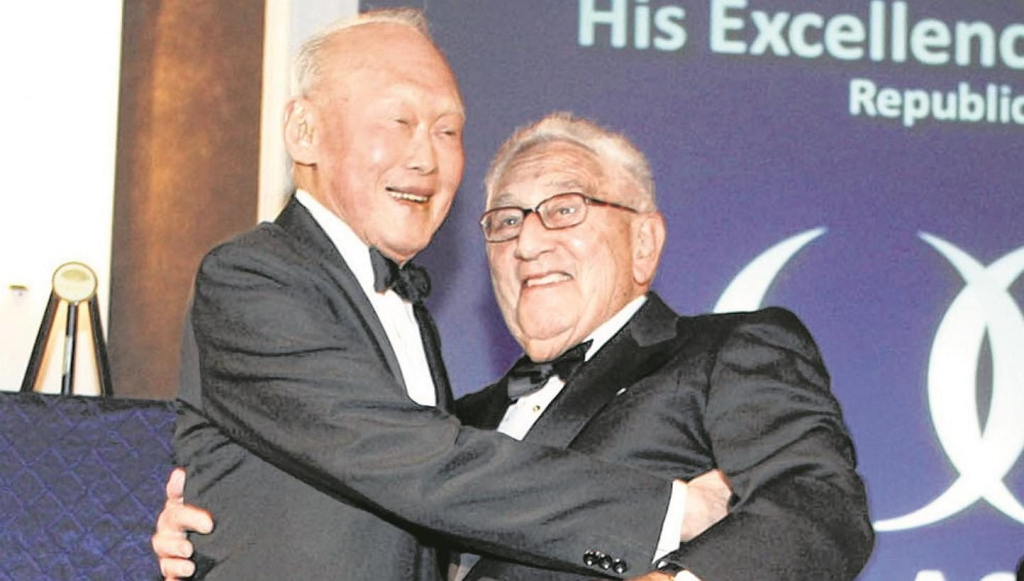
Lee Kuan Yew and Dr Kissinger

His friendship with Lee Kuan Yew also shaped my view of Kissinger. He was a great friend of Singapore and someone who engaged regularly with Lee Kuan Yew throughout the 60s until his passing in 2015. Kissinger also wrote forewords for both Minister Mentor Lee’s autobiographies and Graham Allison’s interview series written based on his interviews with Minister Mentor Lee. They both share a common agenda – pragmaticism and obsession with excellenceThis ideal is something that I share equally. Policy of course always has trade-offs but what matters is whether the better trade-off and decision were made. Lee Kuan Yew was also criticised heavily by many across the Western media for his crackdown on opposition in Singapore’s domestic politics. Coincidently, Kissinger himself faced stringent criticism against him as he finished his tenure in the White House. Both share this unique combination of being renowned for their contributions but also heavily criticized, but they are both remarkable and outstanding individuals. That’s why I respect them in many ways– but more importantly Dr Kissinger for his immense contributions to the world.

In conclusion, I think he is a complex character that he needs to be studied more extensively, rather than simply criticized for the sake of being criticized. Of course, his decisions need to be analyzed carefully but without the personal ad hominem attacks which I have found increasingly common in today’s period of growing political polarization. I think this statement from his son, David Kissinger, provides some insights into what we can learn. David said on his father’s 100th birthday:

How then to account for his enduring mental and physical vitality? He has an unquenchable curiosity that keeps him dynamically engaged with the world. His mind is a heat-seeking weapon that identifies and grapples with the existential challenges of the day. In the 1950s, the issue was the rise of nuclear weapons and their threat to humanity. About five years ago, as a promising young man of 95, my father became obsessed with the philosophical and practical implications of artificial intelligence.

David Kissinger

Something that we should live by as we also get older. Continue to remain curious about the world, improve our decision-making, minimise our mistakes and learn from the best, like Dr. Henry Kissinger. He is perhaps the most formidable policymaker of the 20th century.

Rest in Peace.