It was in 2016 when I first watched and observed the outcomes of a US Presidential election. I detested Hillary Clinton back then – I still do now – but I didn’t expect Donald Trump to win, yet he did. Following on from Brexit, this was another shock to the American Establishment and symbolic of the rise of national populism. Back then, I was a hardcore social democrat, and I was disappointed and sad that America lost the opportunity to elect a 21st-century version of Franklin Delano Roosevelt, Bernie Sanders. I consider myself a moderate centrist today, but that’ll be discussed in another blog post.
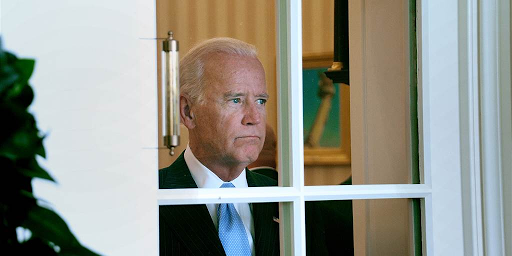
The world witnessed four years of a Republican White House and boy it was a period of pure entertainment and a complete mess. Now it’s 2020 and the Democrats have selected an old, weak and out of touch politician – Joe Biden – as their candidate. Throughout 2019 and 2020, I felt that the liberal establishment learnt absolutely nothing from 2016, and it shows. Despite the polls suggesting that it will be a landslide for Biden, they were completely wrong. The US election is still an ongoing dispute and it is still too close to call for either of the candidates. The rustbelt states such as Michigan, Pennsylvania, Wisconsin have moved back towards the Democrats, but only because of Trump’s incompetency regarding Covid-19. They have lost seats in the House and also the Senate is in the strong hands of the Republicans. If Trump didn’t have to deal with Covid-19, the President may have indeed had a landslide victory against Biden.
The question is why did the Democrats perform so poorly despite the expectation? The Americans have faced a period of complete chaotic governance by the Trump Administration but many still voted for him. The fact of the matter is that many Americans are sick and tired of political correctness, wokeness, and identity politics. And this is taking into account Trump’s disastrous policies. Many people including Sam Harris, Andrew Sullivan, Eric Weinstein, Paul Graham, and Niall Ferguson and others have previously warned centre-left people about this form of politics.
One prominent scholar that understood this problem for the Democrats was Stanford’s Francis Fukuyama. He covered this topic of identity politics in his book, ‘Identity: The Demand for Dignity and the Politics of Resentment’. The core thesis of the book surrounds the concept of ‘thymos’. Fukuyama described it as “part of the soul that craves recognition or dignity.” Fukuyama says that the thymos of blue-collar, white Americans was not recognised by the political and economic establishment in America in 2016. The craving of status and recognition is not a new phenomenon, which is evident from the cultural movements of the 1960s – the civil rights movement of African Americans, Women, LGBT, and even the environmental movement. These movements were legitimate and necessary but extended far beyond its necessity up until 2016. Because that sense of dignity was ignored by the Democrats, but recognised by Trump in the form of nationalist sentiment and protectionist economic policies, they switched to him. Even with his racial rhetoric, many didn’t care, they were just glad someone wanted to talk about the negative externalities caused by globalisation. The former core of the Democratic Party was on socioeconomic issues, but it moved on entirely into cultural matters, even in 2020.
Another scholar regarding this is Charles Murray. His book ‘Coming Apart: The State of White America, 1960–2010’, explored the economic consequences of globalisation and how there is a growing gap between white working-class Americans and the urban white-collar class. The sad state of working-class America was largely ignored by the liberal establishment. The state of white America is increasingly divided along economic lines, not cultural lines. The Democrats didn’t even talk about this topic in 2016, nor did they refer to it in 2020. The Party has taken the votes of traditional blue-collar Democrats for granted.
Hence many former voters of Obama switched to Trump. This is why they lost 2016, and may only just marginally win 2020 because of Covid-19. Instead of trying to legitimately deal with the adverse consequences of globalisation, and help those people that lost their jobs to China and Mexico, their mantra was focused on intersectionalism, transgender bathrooms, and the dangers of white supremacy. Think about it, if you are a former worker of a manufacturing factory in Pennsylvania, and you lost your job, got divorced and on unemployment benefits, and the Democrats are talking about 50/50 quotas, gender pronouns, refugee rights, global governance and so on – you would feel politically unrecognised. They ignored the former core base that has voted for them from the 1930s to the 1990s. The embodiment of woke politics is symbolised by Democratic politicians like Stacey Abrams, Kamala Harris (the unlikable Vice-Presidential candidate), Alexandra Ocasio-Cortez and others.
George Mason University Professor Alex Tabarrok’s Tweet sums this phenomenon quite well:
My takeaway is that a large number of people HATE the cultural left (not the econ left) and are willing to put up with almost anything, including incompetence, chaos, corruption and bad policy, to signal their views loud and clear.
The Democrats need to move on from identity politics and move back to the core economic issues of our time – this also applies to the New Zealand Labour Party and the Greens by the way. The world is witnessing the rise of a new technological revolution and developments in Artificial Intelligence and automation. This will disrupt the international labour market significantly. This will be far more pervasive than the Industrial Revolution and exponentially more consequential. We also have global warming and climate change that requires vigorous economic and scientific analysis to legitimately solve this international problem. We also have an ongoing geopolitical competition with the West and China. Are Democrats taking these challenges seriously? In my eyes, the answer is ‘No’. The economic left of the party needs to regain control of the narrative and the cultural left need to understand that this style of woke politics will drive more voters towards the right. There is a legitimately strong case for competent centre-left politics that can try to correct structural dislocation of manufacturing work and increasingly precarious jobs (including repetitive white-collar jobs too). I see politicians such as Andrew Yang and Tulsi Gabbard as the potential embodiment of the Democratic Party’s future (coincidently they are American minorities as well).
The Democrats have so far been absolutely hopeless. Regardless of what the 2020 election outcomes will be, they need to take socioeconomic issues far more seriously. As a fan and admirer of the United States, I hope they sort their domestic affairs out.