Leonard Hong shares his experience of studying in Singapore on a Prime Minister’s Scholarship for Asia.
I strongly urge students to apply for the Prime Minister’s Scholarship for Asia, it was one of the best decisions of my life.
As an undergraduate student at the University of Auckland in 2019, I finished the autobiography by former Singaporean Prime Minister Lee Kuan Yew, From Third World to First: The Singapore Story: 1965-2000. This book ignited my fascination with Singapore. From that point, I had in my mind that one day I could study or live in Singapore in order to gain a deeper understanding of the economic miracle it has achieved.
Fast forward five years later, I was able to realise both objectives. I just completed my postgraduate degree at the S. Rajaratnam School of International Studies (RSIS) in Nanyang Technological University, Singapore. With its entrepreneurial dynamism and open international economy, I was lucky to have lived in this remarkable nation. I am grateful for the opportunity as it provided me with a world-class education with a much better understanding of Singapore’s political economy as well as other Southeast Asian countries.
Some friends asked me before, “Why International Political Economy, Leonard?” I have always responded that solving complex global and domestic challenges requires an interdisciplinary understanding of political science and economics. I thought the Master of Science degree offered by RSIS would allow me to build a more comprehensive analytical framework with better technical skills.
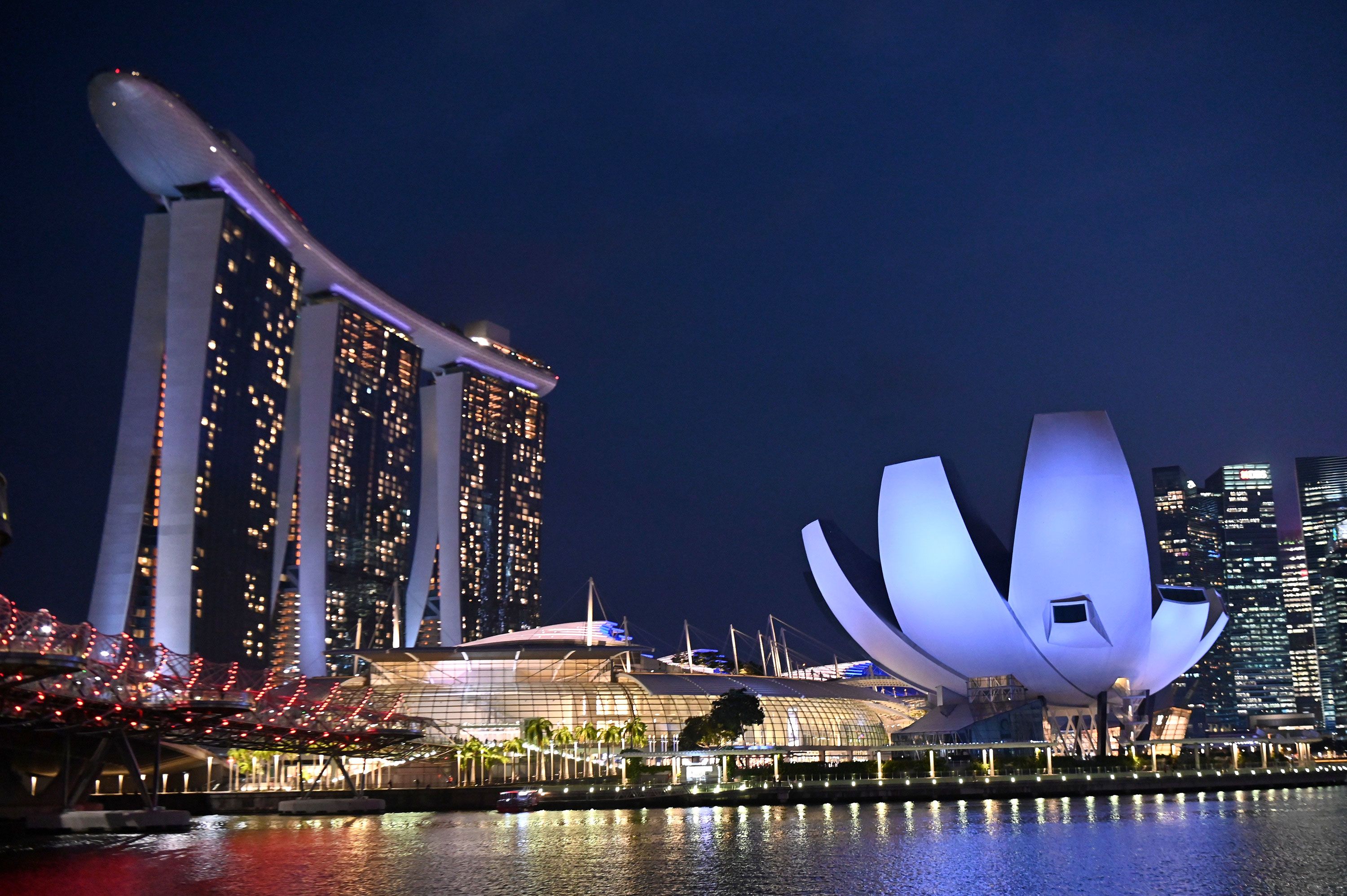
Gardens by the Bay.
Furthermore, Singapore was a perfect place to study for me as a global financial hub of Southeast Asia reliant on international trade and investment. New Zealand has a similar demography with low corruption and pro-business practices. Singapore’s approach to governance and public policy offers valuable lessons, adaptable to our unique local context.
My dissertation topic considered the fiscal implications of its domestic savings scheme and how that translated to its accumulation of public assets – sovereign wealth funds – and its private pension schemes. I compared and contrasted Singapore with New Zealand and uncovered certain setbacks within our approach. I was able to get coverage from the New Zealand Herald’s Liam Dann’s business column on my comparative political economy analysis as well as publishing a column myself on the New Zealand Herald arguing against a capital gains tax. It was gratifying to contribute to policy debates back home, even from abroad.
The timing of my programme was also impeccable. I was fortunate to meet New Zealand Prime Minister Rt Hon. Christopher Luxon and Minister of Climate Change Hon. Simon Watts in Singapore as part of their Southeast Asia trip in April fostering greater trade and investment across the Indo-Pacific region. Their choice of Singapore as the first destination outside Australia was significant to me.
With Professor Tommy Koh.
I also had the opportunity to meet various policymakers and public intellectuals from Singapore. I had a quick meeting with Minister of State Alvin Tan about his portfolios and responsibilities. Conversations with Professor Kishore Mahbubani on US-China relations and the future of ASEAN were enlightening. I also was very honoured to meet Professor Tommy Koh who graciously signed his book for me during our conversation.
With Dr Anne-Marie Schleich for book launch.
Moreover, I served as the master of ceremonies for the launch of a new book edited by Dr. Anne-Marie Schleich—Senior Adjunct Fellow at RSIS and former German Ambassador to New Zealand—titled Perspectives of Two Island Nations: Singapore-New Zealand. This event, co-hosted by the New Zealand High Commission in Singapore, RSIS, and World Scientific Publishing, was one of the first books directly comparing and contrasting public policy in New Zealand and Singapore.
My time abroad in Singapore well-exceeded my expectations. I met various famous Singaporeans in my field of interest, networked and built a new cohort of friends for life and my understanding about Southeast Asia expanded significantly. This experience made me more resilient, adventurous, and globally minded. It taught me the importance of cultural understanding and empathy in solving global problems.
With Singaporean Prime Minister Lawrence Wong.
I encourage more students and professionals to consider studying in Singapore and building connections to contribute back to New Zealand. I share my story not for its own sake but to motivate others to pursue similar opportunities, learn, grow, and explore Singapore’s unique and unorthodox policy approaches.
The Treasury, in its briefing to incoming finance minister Nicola Willis, said a comprehensive capital gains tax would generate more tax revenue to help balance the Government’s books.
But can’t prudent fiscal policy be achieved in other ways?
Singapore provides some answers.
A couple of weeks ago, the city-state’s finance minister Lawrence Wong released the 2024 Budget.
As with other countries, immediate social spending and investment were prioritised in response to the ongoing cost-of-living crisis and challenges relevant to long-term productivity and population ageing.
However, there is a stark contrast between the city-state and other major developed economies. Singapore has net zero debt, and, in some ways, has already solved the long-term fiscal issues facing other countries.
Singapore’s government gross debt level is worth 170 per cent of gross domestic product (GDP). But this is offset by high levels of domestic savings in both the public and private sectors. The city-state is a capital exporting country that generates reserves from its large financial assets and public investments.
A large portion of the public sector comprises large government-linked companies – such as SMRT Corporation and Singapore Airlines – and its sovereign wealth funds – including the Government Investment Corporation and Temasek Holdings.
GIC has around US$770 billion ($NZ1.2 trillion) in assets under management and Temasek has US$290b ($NZ470b). In combination this is around 227 per cent of Singapore’s GDP.
In contrast to libertarian claims that governments should simply reduce wasteful spending, Singapore’s approach to fiscal policy involves an effective and strategic government that leverages the state as an investment vehicle.
Former Singaporean finance minister Goh Keng Swee said it best: “Our experience confirms some of the conventional wisdom of growth theory, but refuses much of the rest. The role of government is pivotal.”
Simultaneously, in the private sector, the Central Provident Fund (CPF) plays a fundamental role providing social insurance to citizens, but in the form of self-provision rather than a ‘pay-as-you-go’ social security system, such as in the West.
Singaporeans are required to save up to 20 per cent of their wages, and an additional 17 per cent is provided by their employers, which is invested by the CPF Board. As of 2023, CPF managed around S$571b (NZ$707b) – equivalent to 92 per cent of Singapore’s GDP.
Overall, Singapore’s fiscal management has been outstanding, and its prudent fiscal management has allowed the country to thrive as the diamond of Southeast Asia. The city-state currently has a very high net worth position.
I came to study in Singapore to understand precisely why this was possible and what policy lessons the city-state could provide for New Zealand.
I was inspired by Lee Kuan Yew’s story. It was in 2019 when I first read his autobiography, ‘From Third World to First: The Singapore Story, 1965-2000′. It sparked my desire to study in Singapore and learn about its unique and unorthodox economic model and policies.
My time in the city-state has made me realise that we have much to learn from its fiscal policies – particularly around public asset management. In contrast, our economic history has a mixed record.
For NZ, we missed the golden economic opportunity when then-prime minister Sir Robert Muldoon cancelled our superannuation scheme in 1975. It was one of the worst economic decisions made by a government. If we didn’t, NZ would have much higher domestic savings potentially as high as NZ$500b.
Sir Michael Cullen’s decision to revive a private saving scheme under KiwiSaver in 2005 was a sensible decision, but it was insufficient. The total KiwiSaver funds currently under management is NZ$105b – equivalent to 25 per cent of NZ’s GDP. It is an automatic enrolment scheme with minimum and maximum contribution rates of 3 per cent and 10 per cent. This is much lower than Singapore’s compulsory rates for both employers and employees.
Cullen also introduced our sovereign wealth fund – the NZ Super Fund. It was an innovative policy developed in 2001 based on his long-term foresight and prescience that demographic ageing would result in a significant increase in pension demands. Our sovereign wealth fund currently has a balance of NZ$70b – 18 per cent of GDP. Draw downs will start soon in 2033.
Since the passing of the 1994 Fiscal Responsibility Act, there was strong bipartisan consensus of ensuring persistent budget surpluses. This institutional framework helped our nation to weather the storm of the 2007-08 Global Financial Crisis and the Covid-19 pandemic because of our low debt position of 19 per cent of GDP in 2019.
Yet, in stark contrast to Singapore, NZ has not been able to build greater public assets that could be utilised in favour of the long term. There is no doubt that our KiwiSaver plans are competent, but their investments have not been diversified, with a significant portion of funds being invested passively abroad. Regulatory hurdles have hindered the growth of the sector and greater competition.
Although the NZ Super Fund is highly regarded internationally, with annualised investment returns of around 10 per cent over the past 20 years, the fund’s size could have been larger if the previous National-led government had not stopped contributing to the fund to reduce budget deficits.
It is clear that based on the projections from the NZ Treasury, demographic change and population ageing will have substantial fiscal implications with net debt expected to reach above 160 per cent of GDP by 2060. In the words of late Harvard economist Martin Feldstein: “The current structure of pension systems in most developed countries cannot be sustained without cutting benefit levels substantially or introducing much higher taxes”.
Therefore, whilst maintaining fiscal discipline, pursuing the development of much greater public assets and ‘nudging’ individuals and households towards greater domestic savings is fundamental to NZ’s long term fiscal position.
Singapore’s unorthodox but pragmatic economic model provides some answers to our future challenges.
Nicola Willis should consider examining parts of Singapore’s macroeconomic strategy – it’s not just about balancing the books but identifying methods in building significant domestic capital savings and developing strategic government assets in the interests of the public.
Leonard Hong is a NZ Prime Minister’s Scholar for Asia, studying for a Master’s degree in International Political Economy at Nanyang Technological University, Singapore. He is also an Asia New Zealand Foundation Leadership Network member.
On November 23, 2023, Dr. Henry Kissinger passed away at his home in Connecticut peacefully at the age of 100 years. Being a curious student of international affairs, I’ve always found him an unusual character – someone who perhaps has a terrible reputation and yet simultaneously admired by elites and academics for decades. When I heard the news pop up on Bloomberg, I felt sad in contrast to other peers around me. Many called him a “war criminal” for his actions as Secretary of State and National Security Advisor under President Nixon. But paraphrasing from his biographer Niall Ferguson, I think that claim may be quite harsh because various American policymakers have made either worse or equally destructive decisions such as President Truman’s nuclear bombing of Hiroshima and Nagasaki. Yet, I do think he deserves scrutiny and history needs to be objective.
Personally, despite what others might say, I put myself relatively more in the “admirers” camp. It is not because I agreed with everything he did – I have strong disagreements with some of his foreign policy approaches and found his brash arrogance across his books occasionally annoying – but rather to do with his academic contributions. Yes, his unilateral involvement in Chile created prolonged issues with the installment of Dictator Augusto Pinochet. His actions in Vietnam prolonged the war which perhaps caused more American deaths and unnecessary suffering of the Vietnamese people. Kissinger and Nixon’s call to carpet bombing Cambodia likely contributed to the rise of the genocidal Khmer Rouge. His decision to support the Bush Administration’s 2003 War in Iraq alongside the neoconservatives was also indefensible. However, he also made a lot of world-leading decisions. Following the initial engagements he had with Mao Zedong in the 1970s, his realist approach to international relations changed the world, paving the way for Deng Xiaoping’s pragmatic leadership. Without Kissinger’s foreign policies, the world would not have witnessed the rapid rise of globalization and exponential improvements in the world economy.
He is also someone who never stopped learning and provided important scholarship in his subsequent years even before his passing. I was fortunate enough to read two of his books, “World Order” and “On China“. I’ve also read his authorized biography, “Kissinger: 1923-1968: The Idealist” by Niall Ferguson as well, which taught me a lot about what it takes to become a master in the field of international relations and how he leveraged his networks with elites. A very charming and charismatic diplomat who be-friended Nelson Rockefeller as a Harvard Professor. I did buy a copy of his last work published in 2022, “Leadership: Six Studies in World Strategy” which I hope to read sometime after I finish my postgraduate programme in Singapore. Nevertheless, throughout his overall scholarship, he always emphasized the importance of pragmatism and effectiveness, rather than ideological crusades in the image of “liberalism”. The notion of the balance of power, the 1648 Treaty of Westphalia, and the crucial importance of “legitimacy” were all common themes throughout his books. He has historically toyed with Immanuel Kant’s “Perpetual Peace” hypothesis and was in many ways a person with strong convictions on a morally just society based on his previous experience as a German Jewish refugee to the United States. His decision-making was made broadly on the strong sentiment that there is no such thing as solutions, but only trade-offs – the worst of two evils. Whilst this might sound cruel, he always kept this sense of tragedy in his mind and viewed human nature broadly in a negative light. Machiavellianism was one of the key ideas that I think he utilised to maximize his own position. A complex ideological thinker who was a true Realist, but context-driven with strong moral convictions about what he truly believed
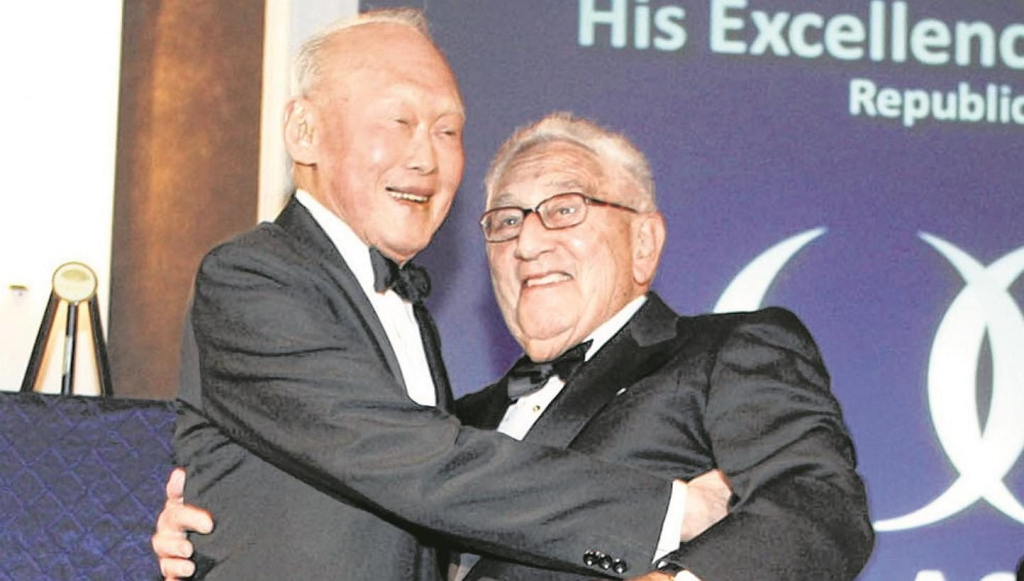
Lee Kuan Yew and Dr Kissinger
His friendship with Lee Kuan Yew also shaped my view of Kissinger. He was a great friend of Singapore and someone who engaged regularly with Lee Kuan Yew throughout the 60s until his passing in 2015. Kissinger also wrote forewords for both Minister Mentor Lee’s autobiographies and Graham Allison’s interview series written based on his interviews with Minister Mentor Lee. They both share a common agenda – pragmaticism and obsession with excellence. This ideal is something that I share equally. Policy of course always has trade-offs but what matters is whether the better trade-off and decision were made. Lee Kuan Yew was also criticised heavily by many across the Western media for his crackdown on opposition in Singapore’s domestic politics. Coincidently, Kissinger himself faced stringent criticism against him as he finished his tenure in the White House. Both share this unique combination of being renowned for their contributions but also heavily criticized, but they are both remarkable and outstanding individuals. That’s why I respect them in many ways– but more importantly Dr Kissinger for his immense contributions to the world.
In conclusion, I think he is a complex character that he needs to be studied more extensively, rather than simply criticized for the sake of being criticized. Of course, his decisions need to be analyzed carefully but without the personal ad hominem attacks which I have found increasingly common in today’s period of growing political polarization. I think this statement from his son, David Kissinger, provides some insights into what we can learn. David said on his father’s 100th birthday:
How then to account for his enduring mental and physical vitality? He has an unquenchable curiosity that keeps him dynamically engaged with the world. His mind is a heat-seeking weapon that identifies and grapples with the existential challenges of the day. In the 1950s, the issue was the rise of nuclear weapons and their threat to humanity. About five years ago, as a promising young man of 95, my father became obsessed with the philosophical and practical implications of artificial intelligence.
David Kissinger
Something that we should live by as we also get older. Continue to remain curious about the world, improve our decision-making, minimise our mistakes and learn from the best, like Dr. Henry Kissinger. He is perhaps the most formidable policymaker of the 20th century.
I have an announcement to make in regards to my new adventure. I received the Prime Minister’s Scholarship for Asia to study a Master’s degree in International Political Economy at Nanyang Technological University Singapore at the RSIS | S. Rajaratnam School of International Studies starting in August this year. This is an exciting opportunity for me to pursue my passion in political science and economics at a world-leading institution ranked alongside John Hopkins and Columbia University.
I decided to study in Singapore because I was intrigued by Lee Kuan Yew’s leadership and the city-state’s economic miracle. As a result of its world-leading meritocratic approach to governance and Singapore’s emphasis on excellence within its society, the nation is now one of the most developed economies in South East Asia. In particular, I am eager to learn about Singapore’s sovereign wealth funds, its interconnections with state-entities like the Monetary Authority of Singapore, Temasek, GIC and the Central Provident Fund.
I would like to thank my academic and professional mentors, notably Professor Natasha Hamilton-Hart and Andrew Bayly MP; and also colleagues and friends who have contributed to my personal and professional development. Special thanks to Education New Zealand | Manapou ki te Ao for the financial support. I’m looking forward to this new adventure abroad that takes place soon.
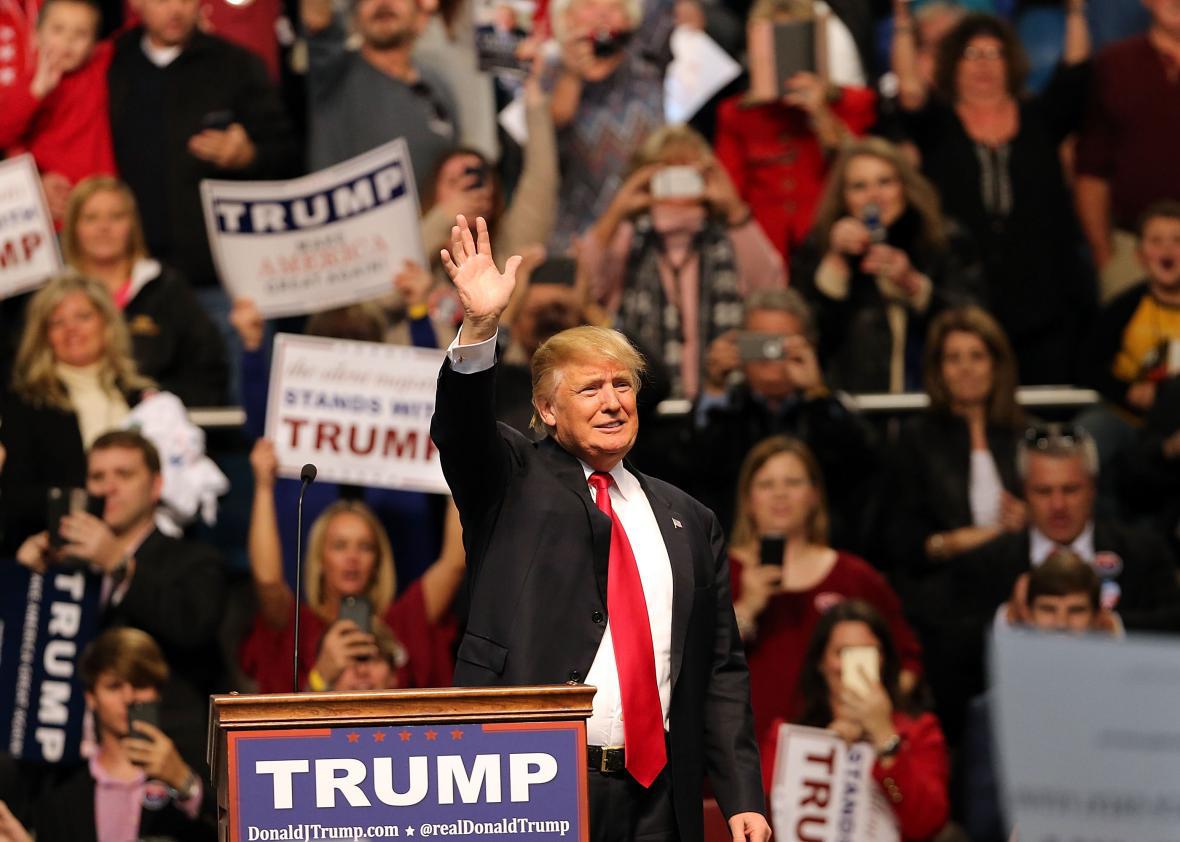
A famous national populist, former US President Donald Trump
The economy is not an understandable and controllable machine as assumed by conventional macroeconomic theory. Rather, the economy is a complex, adaptive system, like many others in nature and society, in which policies can have significant, unintended consequences.
Former BIS Chief Economist William R. White
We are dealing with an intellectual problem—a profession that has been absorbed by theoretical constructs abstracting from human behaviour. We are dealing with ingrained ways of thinking. The challenge is to raise questions about accepted approaches, in drawing lessons from recent experience. We need to pull economics back into the real world of political economy.
Former Federal Reserve Chairman Paul Volcker
We also have to recognize that good economics cannot be divorced from good politics: this is perhaps a reason why the field of economics was known as political economy. The mistake economists made was to believe that once countries had developed a steel frame of institutions, political influences would be tempered.
Former IMF Chief Economist and University of Chicago Professor Raghuram Rajan
Leonard’s Curiosity in Economics
My interest in the political dimensions of economic policy began while I was still an undergraduate student at the University of Auckland. I was intrigued by the rise of Bernie Sanders in the United States and Donald Trump in 2015. They both represented movements against the status quo of government. Meanwhile, in my Economics courses, I was learning about macroeconomic models of endogenous growth, the Solow-Swan theory of technological progress, Paul Krugman’s liquidity trap theory, Milton Friedman’s monetarist theory, among other frameworks. An intense interest in both Political Science and Economics led me to major in both disciplines (History and International Business were later added in 2018).
Theoretical economic models were fascinating. Yet, in my mind economists have been missing the mark.
I was particularly intrigued by the global financial crisis (GFC) of 2007-2008. What caused it? The greed of Wall Street, easy monetary policy, or institutional corruption? Globalisation? Are there political influences at play? Exactly how can geniuses from Ivy League universities make such an error? I was perplexed by the global financial crisis and remained keenly interested in it (so much so that I even co-authored a report on the potentials for the next financial crisis in 2021).
The failure of world-renowned economists – in the likes of Larry Summers – to identify the fundamental causes of the GFC (and the aggregated political effects of that crisis) convinced me that the discipline required fundamental reform.
My education at the University of Auckland contributed to my intellectual framework. However, the models and theories that I learned in my economics classes were insufficient to prepare me to be an excellent economist. I believe that the study of Political Science, Psychology and Economic History should become complementary areas for students studying Economics.
As someone who also holds a degree in History, the economic topics within all of the courses I took always intrigued me. Among these themes are, for example, the role of hyperinflation in the fall of the Weimar Republic and the rise of Hitler; the rise of Keynesian economics and the New Deal; the rise of the Bretton Woods system and its effects on international affairs; the revival of Communist China under Deng Xiaoping; and the experience of New Zealand under Rogernomics and Ruthanasia. In contrast to my colleagues who were studying other topics, I was fascinated by economic problems and how they affected the political system in general. As I see it, Economics is a hybrid of the humanities and the sciences – a social science. I was told by my history lecturer, Dr Paul Taillon, that I had more of a ‘political economy’ bent. I fully concurred with his assessment.
My involvement in Economics as a discipline was motivated by this experience. An overview of my obsession with the subject is presented in this section. It is fascinating to me and I intend to continue my studies in the future. In the next section, I will explain the fundamental causes of the GFC and why many economists got their predictions completely wrong.
The Failures of Economists: Predicting GFC
Many economists, including Nobel laureate Paul Krugman, admitted they were wrong in the wake of the first major economic catastrophe since the Great Depression. Most mainstream economists failed to predict the onset of the financial crisis in 2007-2008 (with notable exceptions such as William R. White, Niall Ferguson, Raghuram Rajan and Kenneth Rogoff). There was a great deal of hubris and arrogance in the profession.
By the beginning of the 1960s, mathematicians and engineers were becoming increasingly involved in the economics discipline, leading to the development of econometric models as a dominant source of policy analysis. One of the main reasons this occurred is the rise of mathematical economics. Paul Samuelson and other ‘technical’ economists popularised this sub-discipline. Prior to this disciplinary revolution, the subject was called ‘political economy’, not economics as we all understand it today. Through mathematic economic modelling, increasingly more experts have become almost certain that modelling meant that it will be reflected in the real world. In many ways because of what the numbers told them, many determined that the risk of financial collapse has been eliminated. Financial markets are supposedly safer as a result of the ‘Great Moderation’ and technocratic management of the economy. Francis Fukuyama’s End of History did not help. It created further arrogance and complacency among western elites, believing that they were destined to spread free markets and liberal democracy globally. However, with the bursting of the housing bubble in 2007, the Great Moderation of 1987-2006 proved to be a myth as it led to the collapse of the global economy.
The GFC taught me that economics was not an entirely objective or empirical discipline in the same vein as mathematics, chemistry, and physics. In the words of former Bank of England Governor Mervyn King, “Economists have brought the problem upon themselves by pretending they can forecast. No one can predict the unknowable future and economists are now exception”. Economists forgot a very important concept called ‘radical uncertainty’.
In terms of quantitative predictions, in many ways they are correct in the modelling. But it is correct in real life? No. The models are not perfect. Individuals are not fully rational. Statistical formulas and mathematical equations can get manipulated to provide the authors of a particular research paper with data that supports their hypothesis.
I do not claim, however, that empiricism does not matter – it does matter to a considerable degree. Using models, we can obtain an understanding of what is happening throughout our economic system. We would struggle to solve problems without the aid of hypotheses testing and quantitative methods. But it does become problematic when economists strictly rely on models, as fundamentalist beliefs, akin to the scientific fact of gravity.
Pricing for options is an example of this. The Nobel Prize in economics was awarded to Robert Merton of Harvard University and Myron Scholes of Stanford University for their contribution to calculating stock options (a form of derivatives). In the financial world, it was believed that ‘rational’ calculations of these risky investments were feasible. But this was utter nonsense. It is nearly impossible to determine the value of these complex financial instruments. Analysts have devised numbers to create an impression of credibility. It was just a bogus form of quantification. There was a quasi-religious belief among people in the financial sector that risk had virtually disappeared following the introduction of these objective models. This legitimized financial gambling. This intellectual debacle was caused by the dogmatism of belief in ‘market perfection’ and ’empiricism’. Economist Raghuram Rajan questioned this dogma of the financialisation of the world economy in his 2005 research paper. He showed that actually banks and financial institutions were making more money via more risk, not less risk as shown by these models for derivatives. As shown in the documentary ‘Inside Job’ by Charles Ferguson, to some degree it was a form of intellectual and moral corruption where economists across elite institutions brought the idea that risk was eliminated.
The failure of economists told me a few things. There needs to be a fundamental restructure in the education of future economists. Economics as a discipline needs to combine both the ‘economic history’ and empirical methods to explain and understand complex systems like the global economy. More emphasis needs to be placed on the ‘humanity’ aspect of economics. The classical scholars in the likes of Adam Smith, David Ricardo, David Hume, John Maynard Keynes and even Hayek were not entirely mathematically driven economists. All of them were experts in the political economy. Excess objectivity within the field of economics led to financial disasters and hubris.
The GFC should have been a wake up call, but have there been some changes? Not necessarily. Economists still buy into their DSGE models and macroeconomic equilibrium hypotheses. Although some economists in the likes of Dani Rodrik, Raghuram Rajan and Joseph Stiglitz have been warning others for some time about the continued failure of their fellow colleagues to diagnose the problem. What we witnessed instead were significantly political consequences in the form of both left wing and right wing populism.
Backlash against the Technocrats – Western Populists
While the mainstream neoclassical economists continued to repeat their talking points to the world, the world was shifting to a more polarised society. The GFC did not help the cause. With millions of ordinary people losing their life savings and wealth. Simultaneously, big banks and financial institutions were bailed out without any jail time for many of the financial executives that created the problem. Injustice and economic corruption led to a growing mistrust towards public institutions.
Politically, people became very angry across the world and manifested to resentment.
As shown by Charles Murray’s ‘Coming Apart‘, much of the political discontent had to do with offshoring of manufacturing and the decline of communities in former manufacturing hubs such as Detroit. These states and regions are nicknamed Rustbelt states for a reason. These same white-working class folks lost their jobs and their livelihoods through free trade agreements and offshoring of their jobs into developing countries. The rise of opioid addiction, rising divorce rates, crime, social disintegration, declining social mobility, and educational regression led to an intergenerational downward cycle. J.D. Vance’s ‘Hillbilly Elegy’ does a wonderful job illustrating the extent of the social decay. The richer urban class in states such as California and New York saw their wages increase exponentially with more households and families in these areas getting more educated, while those in the former stronghold manufacturing states such as Michigan, Wisconsin and Pennsylvania failed to see rising incomes. As mentioned by Raghuram Rajan, the premium on College education and demand for skilled work led to growing economic inequality. Social decay and free market prescriptions were a recipe for social disintegration and political discontent.
Globalisation and international economic integration was the correct policy subscription, but the short turn effects were devastating. Although globalisation and free flow of capital and labour led to overall net-positives for the world economy (3.8 billion people in the middle class as of 2018). Economists and policymakers failed to consider these people’s livelihoods. Trade adjustment subsidies and social insurance were insufficient.
Consequently, across the western world, we saw more politicians going against these mainstream orthodoxies. Anti-European Union politicians in the likes of Nigel Farage and Boris Johnson became increasingly popular, meanwhile the US saw the rise of an anti-liberal demagogue in the form of Donald Trump. Simultaneously, left-wing populists such as Bernie Sanders and Jeremy Corbyn shocked the world with their relatively successful campaigns for President and Prime Minister (and UK Labour’s leadership).
In my eyes, a healthy dose of populism is important for liberal democracies. It provides people with the sense that something is fundamentally wrong in society and that policy adjustments were warranted. But, extreme and excess populism can lead to bad consequences as we’ve seen with the rise of Hitler and Soviet Communism post-Great Depression. Economic stability and growth is significant for a stable liberal democratic system. Systems can break down and cause revolutions if it gets out of hand. This is why understanding the root causes of contemporary populism and dealing with the problems raised is crucial. However, I’m yet to see any western politician hoping to resolve the anti-establishment populist sentiment. Nor are economists willing to provide a new approach to this ongoing political economy problem.
Conclusion
“Almost every political question has an economic aspect and almost every economic question has a political aspect”.
Charles P. Kindleberger
As the prominent international political economy scholar Charles Kindleberger states in this quote, economics cannot be separated from politics and vice versa. The rise of mathematical economics and econometrics are crucial to policy evaluation and analyses, but by ignoring economic and political history, we fail to learn our lessons from what really happened. Economics is not just about models – it’s about people’s livelihoods. Humans are not just rational utility maximising robots. We are complex and we cannot rely simply on microeconomic theory, presumptions and calculations as a basis for effective economic policy making.
This opinion piece was to inform readers about understanding and staying skeptical about the economics profession. I have been heavily involved in this field and public policy in the early stages of my career and even though I don’t know much in comparison to many professionals globally, I hope this piece was relatively informative. As Kenneth Rogoff mentioned before, economics should still stay relatively objective and mathematical, but we must not ignore economic history and incorporate other aspects of social science into the equation.
I am a political economy person, and I think more economists should move in this direction.
US President Herbert Hoover once stated, “Blessed are the young, for they shall inherit the national debt.”
Right now, young people have a reason to be concerned. Since Covid-19 arrived 18 months ago, New Zealand’s net public debt has nearly doubled. Government net debt rose from 19% of GDP – Gross Domestic Product – in 2019 to 34% this year.
This is the highest ratio since 1996.
The bulk of debt increase was from the wage subsidies – around $18 billion. Other business support programmes were supplementary. These fiscal responses were intended to enable faster economic recovery.
New Zealanders were seared by the 1984 debt crisis. That experience produced a broad bipartisan consensus in favour of fiscal responsibility rules. Budget surpluses were achieved by the mid-1990s and sustained, albeit with reducing spending discipline, to 2008.
Those surpluses helped New Zealand weather the storms of the 2007-08 GFC and the Christchurch earthquake. But it took seven years of fiscal slog and expenditure restraint to restore fiscal surpluses after the GFC.
Big spending increases from 2017 preceded Covid-19 and now the challenge of turning ongoing fiscal deficits into surpluses has arisen anew.
Are current arrangements up to the task? Not in our opinion. In 2014, the New Zealand Initiative proposed a Parliamentary fiscal council to help Parliament better scrutinise government spending and fiscal prudence.
This was not out of the blue. In 2011, the OECD found that “independent fiscal institutions can buttress a government’s capacity to comply with a numerical rule.” These institutions exist in 28 of the 38 countries in the OECD.
In 2017, the-then opposition parties – Labour and the Greens – endorsed a Fiscal Council of an unclear design. The advent of Covid has stilled work on this, and there are no indications that fiscal discipline and constraint will be the heart of the Government’s priorities.
A global pandemic understandably opens the fiscal taps, but that only heightens the need for a subsequent return to fiscal discipline and accountability. That determination is not yet evident.
To fail to restore discipline in spending quality and current financing is to do future generations a disservice. It is fine for the young to inherit debt backed by assets of equivalent value, but not otherwise. Herbert Hoover’s remark is best seen as a humorous aside that would be irresponsible if put into practice.
This is a good review by Michael Reddell on my co-authored report. As he pointed out, we agree with the Goodhart/Pradhan hypothesis on the demographic implications on the global financial system.
At 11am the New Zealand Initiative released their latest report, by Bryce Wilkinson and Leonard Hong, under the title “Walking the Path to the Next Financial Crisis”. It comes complete with a Foreword from former Reserve Bank chief economist (and former Board chair) Arthur Grimes, under the title “A short walk?”, foretelling doom and repeating his recent attacks on the Reserve Bank’s conduct of monetary policy over the last 20 months, ending with the ominous – and printed in bold – declaration “This time is not different”.
The Initiative was kind enough to send me an embargoed copy yesterday. Perhaps the first thing that rather surprised me – in a document that is really quite critical of both monetary and fiscal policy and aspects of the way the Bank does other things – is that the acknowledgements include thanks to a Reserve Bank MPC member (Bob Buckle) for “valuable feedback…
Content creators are the fastest growing type of small business worldwide. Today, over 50 million people consider themselves ‘influencers’ on social media.
According to YPulse – a youth research organisation in the United States – over 72% of Generation Z wants to become online celebrities.
Nowadays, getting famous on Instagram or TikTok is the ticket to wealth and fame. According to a Harris poll, more kids dream of becoming a YouTuber than an astronaut.
Generation Z kids do not want traditional careers in engineering, medicine, consulting, and teaching. Becoming viral on TikTok through outrageous flamboyance can make you a millionaire. “Don’t need no education, don’t need no thought control”.
Intellectuals, social conservatives and cultural pessimists commonly decry this trend of ‘superficial consumerism’. “Yet another dissolute younger generation in the making”, they sniff.
Yet, pop culture meets a need. No one is forcing the youthful masses to follow ‘influencers’. Following them takes time, and buying the products they endorse swallows money.
This is not new. Teenagers have been buying ‘brands’ for decades. They having been indulging and experimenting in all sorts of things that affront their elders, probably from time immemorial.
So the followers of the influencers must be getting a benefit. In part, it will be a social group thing. I get that.
Moreover, ‘influencing’ must be a competitive and risky business. Entry is free. Anyone can be outrageous and flambuoyant – until the euphoria fades. One tweak that misses its mark could destroy months or years of assiduous cultivating of one’s followers.
Take Daniel LaBelle for example. He started a physical comedy channel on TikTok last year, and now has over 23 million followers. Podcaster Joe Rogan has to entertain 200 million people monthly on Spotify.
Imagine waking up every morning wondering what you can do next to titivate such followers, without blowing everything. Who wants that pressure?
Many influencers will crash and burn, just as pop musicians have for decades.
But pop music endures because it entertains. So far influencers are passing that test.
The world’s major economies are walking into the next global financial crisis. Moreover, their authorities do not seem willing to change direction. They fear that raising interest rates or cutting government budget deficits risks precipitating the collapse they seek to avoid.
Those are the major conclusions of our report we released last Thursday.
In response to the Global Financial Crisis over a decade ago – and then again to Covid-19 – worldwide, major central banks have eased monetary policy settings to an extraordinary and potentially destabilising degree.
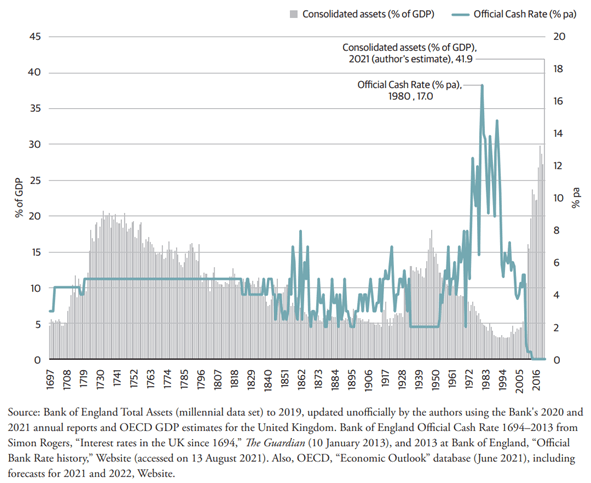
The Bank of England is the world’s oldest central bank. Never since 1697 has its control interest rate been as low as it is today (0.1% pa). Never has its balance sheet relative to gross domestic product (GDP) been as bloated from creating money as it is today. (See the following figure)
The US Federal Reserve, the European Central Bank, and the Bank of Japan have progressively also adopted historically extreme levels for monetary policy settings.
Simultaneously, many governments have pushed their public debt ratios up to an extraordinary degree. Federal public debt held by the public was a historic high relative to GDP at the end of World War II. Congress’s Office of Management and Budget now forecasts that this high will be exceeded in 2024 – a war-time like debt in peace time. This is unprecedented, and it is because of large ongoing budget deficits. The US Federal government’s projected fiscal deficit for 2021 is an astonishing 16.7% of GDP.
In September, US Treasury Secretary Janet Yellen warned the US was heading for sovereign default if the government’s debt ceiling was not lifted. Eventually, Congress agreed to increase the limit, but this merely kicks the debt can down the road – again.
In Europe, a condition set in 1992 for monetary union was that member countries’ gross public debt ratios should not exceed 60% of GDP. According to the latest official forecasts, only 7 of 22 countries will comply in 2021. All the largest economies now exceed 60%. The debt ratios for the seven worst cases exceed 100% – for Italy it is a crippling 166%.
Italy’s high debt ratio is a serious risk to the stability of the Euro currency block. This is because its economy looks to be too large for the rest of Europe to bail out.
Lower interest rates invite governments to borrow more. The utter perversity of the current situation is epitomised by the fact that the Eurozone’s overall government net financial indebtedness has never been higher and the net interest cost lower relative to GDP.
China is also a potential source of instability. Serious debt problems have emerged in its housing market – which accounts for 29% of its economy. This makes it of potential global significance. The debt crisis at Evergrande – the second largest property developer illustrates the concern.
Globally, persistently low interest rates encourage firms and households to borrow excessively to buy assets that would otherwise be over-priced. That contains the seeds for that next crash.
Low interest rates also prolong the existence of “zombie” companies that should be wound up. Healthy companies could use their resources more productively.
High public debt ratios not backed by assets of comparable value give governments a conflict of interest. As economic managers, government should be leaning against excessive borrowing rather than fuelling it by low interest rates and quantitative easing.
Being heavily indebted compromises government’s willingness to act.
This problem of excessive borrowing and over-priced assets has been made worse by the signal the major central banks have been sending to investors – that the authorities will ‘do whatever it takes’to prevent any major collapse.
Professor Arthur Grimes, former chair of the Reserve Bank’s board, wrote the foreword to the report. He succinctly identified that perverse incentive problem:
“Governments, central banks and private sector financial institutions have together created the seeds of the next crisis on the assumption that policy actions will protect borrowers and lenders from downside risks. The result has been a one-way bet for those positioned for asset price rises, while those who have acted prudently have been left behind.”
The perversity of the current situation is further illustrated by the US. In 2020, it recorded the greatest decline in economic activity (real GDP) in at least 60 years. Its unemployment rate more than doubled.
Yet US household wealth rose by a record amount (26%). In dollar terms, it rose by much more than if households had saved 100 percent of national income in 2020.
So, how could US households overall become far more prosperous amidst the biggest downturn in over 60 years? The answer is capital gains and more money in the bank because of the Federal Reserve’s credit creation and low interest rates. US sharemarkets have boomed along with property prices.
The Initiative’s report traces the path to the current government ‘debt trap’ situation, first under the gold standard and subsequently with fiat money.
There is an optimistic scenario. It requires continuing near zero interest rates; low inflation, strong growth that lifts tax revenues; and firm resolve to reduce government budget deficits.
One can hope, but each step in this scenario looks implausible. Consumer price inflation has emerged this year that can only put upwards pressure on interest rates; pressure that central banks have been resisting.
In the past, periods of excessive debt and money creation have tended to end badly. Our report considers two much less rosy, low growth, high unemployment scenarios and one disastrous one of ‘Great Depression’ dimensions.
We leave it for readers to decide what probabilities to put on these and other possible scenarios. Nor does the report speculate about the timing of the next global crisis.
New Zealanders can only take precautionary measures. Being a small and globally integrated economy, New Zealand cannot prevent the next financial crisis.
Reducing debt to prudent levels is important both for governments and households. A fiscal council could help Parliament to hold government to account for the quality of its spending.
Firms and households should avoid borrowing to excess to buy over-priced assets. A narrower and more prudent focus for the Reserve Bank is desirable.
The temptation in the face of such extremes in the major economies is to hope that somehow this global episode will not end in tears – that “this time really is different”. That is mere wishful thinking.
Dr Bryce Wilkinson and Leonard Hong of The New Zealand Initiative co-wrote Walking the Path to the Next Global Financial Crisis.
Both the global financial crisis (GFC) of 2007-2008 and the Covid-19 pandemic caused disruptions to the world economy.
During the GFC, stock markets plummeted, and millions of people became unemployed. Business and bank failures resulted in financial pain.
Covid-19 did not cause as much economic destruction as experts predicted. So far, at least.
During this recession, bankruptcies declined during the pandemic, while prices of assets such as cryptocurrencies, stocks, and houses reached record levels. The net worth of US households increased by USD$26 trillion in 2020.
These developments are extraordinary and unusual. Usually, recessions mean severe losses rather than wealth gains. Are our current financial circumstances sustainable?
Our new report Walking the path to the next global financial crisis explains how skyrocketing public debt and monetary policy easing threaten global financial stability.
In the wake of the GFC, government bailouts of financial institutions ratcheted up public debt ratios dramatically. That was not reversed before Covid struck.
Governments and central banks in developed economies now face tough choices regarding interest rates and debt.
Raising interest rates or ending quantitative easing could destabilise asset markets and the economy. Governments, meanwhile, struggle to wind down stimulus spending and fear higher interest payments on debt.
By printing money and maintaining low-interest rates, it also fuels consumer price inflation. In New Zealand, consumer price inflation hit 4.9% – the highest level in over a decade. Inflation in the US and the EU is also approaching 6%.
The authorities are not showing a determination to return settings to more normal levels before the next economic shock occurs. They have led investors to believe that the government will underwrite high asset prices such as cryptocurrencies, stocks and housing.
It is now common to hear terms like “too big to fail” and “whatever it takes” in financial market jargon. Such beliefs are dangerous for financial stability.
For the government, it is prudent to repair the roof while the sun is still shining. Financial support packages were necessary during Covid-19. But the government should have a credible plan for reducing net debt to more sustainable levels once the pandemic is over.
The financial well-being of citizens is at greater risk when governments are less financially prudent.
As a small, globally integrated economy, New Zealand cannot prevent the next financial crisis.
We do not know when the next financial crisis will hit. But we can prepare for it when it does.